A front door is the first part of a home people touch, hear, and remember. A Luxury Aluminum Entry Door can make that moment feel considered, while adding a durable, low-maintenance entrance. Its clean frame can suit modern architecture, and a wide glass panel can bring daylight into a shaded foyer. The details matter: the handle’s weight, the threshold’s fit, and the quiet, firm sound when the door closes.
Architect Juhani Pallasmaa famously observed, “The door handle is the handshake of the building.” His line captures why an entrance deserves more than a quick style choice. Aluminum allows slim profiles and broad glazing, but performance depends on the complete door system, not the material alone. Look for clear information about thermal breaks, weather seals, hardware, finish options, and installation. Ask how the door will perform in your local climate. Small choices matter.
Luxury is not just a polished surface. A beautiful finish may still show wear, and a dramatic glass panel may need careful consideration for privacy and heat control. That trade-off is worth discussing with a qualified supplier. Compare specifications, inspect samples in natural light, and confirm that the frame, glass, and hardware work together. No door is perfect for every home. A well-chosen one should feel secure, operate smoothly, and suit the building long after the first impression.
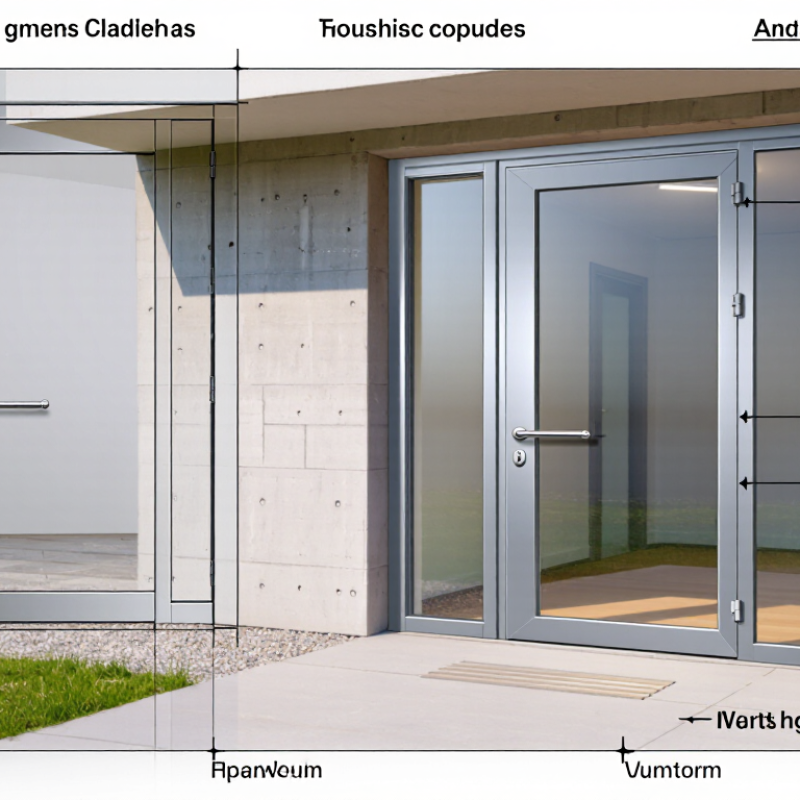
A luxury aluminum entry door is defined by how its parts work together, not by a polished finish alone. The frame should feel rigid, with clean corner joints and even sightlines around the glass. A thermal break separates inner and outer aluminum sections, helping reduce heat transfer through the frame. It matters in daily use. Without careful design, metal can become cold to the touch in winter.
The glazing is another core component. Double or triple panes, low-emissivity coatings, and well-sealed edges can support comfort and reduce outside noise. The exact choice depends on climate, orientation, and household needs. More glass is not always better. A large pane may brighten an entry, but it can also affect privacy and heat gain.
Look closely at the hardware and perimeter seals. Hinges must support the door’s weight, while a multipoint lock can help pull the panel evenly against its seals. A durable powder-coated finish helps resist fading and surface wear, though scratches still need prompt attention. Installation matters just as much as the product: an uneven threshold or compressed weatherstripping can undermine performance. This is easy to overlook. Ask for clear specifications on frame construction, glazing, hardware, and installation details before choosing a door.
Aluminum has a density of about 2.70 g/cm³, compared with roughly 7.85 g/cm³ for steel. For equal volumes, aluminum weighs close to one-third as much. That difference can make a large entry door easier to handle during installation and may reduce strain on hinges and surrounding framing. A lighter feel is not the only measure of quality, though.
A door’s actual weight depends on its design, not density alone. Thick aluminum sections, glass, insulation, locks, and internal reinforcement all add mass. Steel doors may also use thinner sections or different core materials. So the density figures are a useful comparison, not a direct prediction of finished-door weight. In practice, check the manufacturer’s stated door weight and confirm that the frame and hardware are rated for it. A solid, quiet closing action matters too. I would not judge durability from a number alone.
Tips: Ask for the complete door assembly’s weight, including glass and hardware. Check hinge capacity and installation requirements before ordering. Density is only part of the story.
Why Choose a Luxury Aluminum Entry Door?
How Thermal Breaks and NFRC Ratings Shape Door Energy Performance
A luxury aluminum entry door can feel reassuringly solid, but aluminum conducts heat readily. A thermal break places a low-conductivity barrier between the frame’s inner and outer sections. This slows heat transfer and can help limit cold interior edges on winter mornings. The barrier matters most when it runs continuously through the frame; a small gap or poorly insulated threshold can weaken the overall result. Details count.
The NFRC label makes product comparisons more useful. Its U-factor measures how quickly heat passes through a complete door assembly; lower values indicate better insulation. The U.S. Department of Energy reports that windows account for about 25%–30% of residential heating and cooling energy use. That figure is not door-specific, but it shows why openings deserve attention. Check the door’s rated U-factor, then consider glass area, weather seals, and installation quality. A strong rating is not a promise of low bills. Drafts around the jamb, or an uninsulated sill, can still disappoint. Even the best specification needs careful installation.
A luxury aluminum entry door should be judged by its glazing, hardware, security details, and fit—not appearance alone. The U.S. Department of Energy estimates that windows account for 25–30% of residential heating and cooling energy use. For glazed doors, compare NFRC-certified whole-unit U-factor and solar heat gain ratings. Lower numbers are not automatically better in every climate. A broad glass panel can brighten a dim hallway, but privacy may suffer.
Check whether locks, hinges, and strike plates are designed to work together. Ask for documented security-test results and clear warranty terms; a heavy handle alone proves little. Custom options may include glass pattern, frame finish, sidelights, and threshold style. Remodeling’s 2024 Cost vs. Value report estimated a 188.1% cost recoup for a steel entry-door replacement in its U.S. benchmark. That figure is not a promise for custom aluminum doors. Fit matters. A careful installer still matters.
Tips: Request the NFRC label, hardware specifications, and a written installation scope. Compare samples in daylight, then check them beside your interior flooring. Small detail. Review the choices twice; an elegant finish can be harder to live with than it looks.
| Feature | Essential Specification | Enhanced Specification | High-Performance Specification | What to Check Before Ordering |
|---|---|---|---|---|
| Glazing construction | Insulated double glazing with a sealed air or gas-filled cavity. | Low-emissivity (Low-E) coated insulated glazing, selected for the local climate. | Triple glazing or a laminated insulated-glass unit where energy, noise, or safety needs justify it. | Ask for the complete glass build-up, including pane thickness, cavity, coating, and safety-glass locations. |
| Glazing safety | Clear glass in non-critical locations, subject to local building requirements. | Tempered safety glass in locations where impact safety rules require it. | Laminated glass or a suitable laminated insulated-glass unit for added resistance to glass breakage. | Confirm which panes require safety glazing under the applicable local code; tempered and laminated glass serve different purposes. |
| Thermal performance | Thermally broken aluminum frame with insulated glazing. | Thermally broken frame paired with Low-E glass and effective perimeter weather seals. | Improved frame, glazing, spacer, and seal package selected to meet a documented whole-door target. | Compare whole-door U-factor or U-value, not glass-only figures. Results depend on the door size, glass area, and test method. |
| Weather sealing | Continuous perimeter weatherstripping and a durable threshold. | Multiple sealing points, adjustable threshold details, and suitable drainage provisions. | System-tested seals and threshold configuration chosen for the site's exposure to wind-driven rain. | Request applicable air-leakage and water-penetration test data for the configured door, if available. |
| Locking hardware | Single-point latch and deadbolt, with a compatible reinforced strike area. | Multipoint locking that secures the door at several points along the frame. | Multipoint locking with reinforced lock-side details and hardware specified for the door's size and weight. | Check the locking-point layout, frame reinforcement, cylinder compatibility, and availability of replacement parts. |
| Cylinder and access | Key-operated cylinder with a thumb-turn or other locally compliant interior arrangement. | Higher-security cylinder options and compatible keyed-alike arrangements. | Mechanical, keypad, or connected access options, when supported by the door and locking system. | Verify cylinder dimensions, emergency-egress rules, power requirements for electronic access, and manual override arrangements. |
| Hinges and door control | Load-rated hinges matched to the door leaf and opening direction. | Adjustable hinges and a closer option for controlled, consistent closing. | Heavy-duty, corrosion-resistant hardware and door-control components selected for frequent use or larger leaves. | Confirm hinge load capacity, adjustment range, opening angle, and suitability for coastal or high-humidity conditions. |
| Aluminum finish | Powder-coated finish in a standard color selection. | Expanded color range, including different interior and exterior colors where offered. | Custom color or anodized finish options, subject to the fabricator's process and project requirements. | Request finish samples and care instructions; confirm color consistency expectations and warranty terms. |
| Design and sizing | Common single- or double-leaf layouts with a selection of panel designs. | Made-to-measure dimensions, side panels, top lights, and selected glazing patterns. | Project-specific layouts, custom proportions, and coordinated finishes, subject to engineering limits. | Confirm the rough opening, handing, threshold height, panel widths, and any structural limits before production. |
| Security documentation | Hardware and frame specifications supplied for review. | Product test reports or relevant component documentation available on request. | Door-set testing or certification to a recognized standard where offered and appropriate to the market. | Ask which exact door configuration was tested; performance can change with glass, size, hardware, and installation. |
| Installation and upkeep | Professional installation with perimeter sealing and correct frame anchoring. | Installation details reviewed for the wall type, exposure, and drainage conditions. | Documented installation plan, hardware adjustment, and maintenance schedule for the completed assembly. | Confirm installer responsibilities, adjustment visits, cleaning guidance, and warranty coverage for both product and installation. |
Comparison note: Specifications and test results vary by door design, dimensions, glazing configuration, hardware, installation, and local requirements. Request documentation for the exact proposed door assembly before comparing quotes.
A luxury aluminum entry door can feel solid under the hand, with a clean frame and precise fit. Its environmental story also depends on what happens before the door reaches a home. According to the International Aluminium Institute (IAI), recycling aluminum uses about 5% of the energy needed to produce primary aluminum. A striking gap.
That figure matters because primary production requires energy to extract and refine aluminum-bearing ore, then smelt the metal. Recycling instead melts recovered aluminum for reuse. The comparison is about aluminum production, not the full footprint of a finished door; collection, transport, coatings, glass, and hardware also count. Details matter.
Recycled content does not automatically make a door durable or efficient. Alloy quality, careful sorting, frame design, thermal breaks, and weather seals affect real-world performance. A well-made frame may keep its shape through years of daily use, but poor sealing can still let drafts creep around the edges. Buyers should ask for documented recycled-content figures and product-specific performance data, not rely on a broad sustainability claim. The 5% statistic is compelling, though it can sound more complete than it is. It describes an important production-energy advantage, not a guarantee that every aluminum entry door has a low total environmental impact.
Its frame, glazing, seals, hardware, and installation should work together. Look for rigid corners and even gaps around the glass. A glossy finish alone proves little.
It separates the frame’s inner and outer aluminum sections, reducing heat transfer. Without one, the inside metal may feel cold in winter. Worth checking.
No. A large pane can brighten a dim hallway, but may reduce privacy or increase heat gain. Consider the room’s direction and nearby sightlines.
Aluminum’s density is about 2.70 g/cm³, while steel’s is roughly 7.85 g/cm³. Equal volumes of aluminum weigh close to one-third as much. Actual door weight also depends on glass, reinforcement, and hardware.
Ask for the complete door weight and confirm the hinges and frame can support it. Check that the lock and strike plates work together. A heavy handle proves little.
Double or triple panes, low-emissivity coatings, and well-sealed edges can help with comfort and outside noise. Compare whole-door ratings, not glass alone. Lower numbers are not always better for every climate.
An uneven threshold or compressed weatherstripping can undermine the door’s performance. Ask for a written installation scope and inspect the perimeter seals after fitting. I might overlook that detail.
Consider glass patterns, frame finishes, sidelights, and threshold styles. View samples in daylight beside your flooring. A finish can look different at home. Check privacy, too.
A Luxury Aluminum Entry Door combines a refined appearance with a carefully engineered frame, glazing, seals, and hardware. Aluminum’s density of about 2.70 g/cm³ is considerably lower than steel’s 7.85 g/cm³, helping create a strong, relatively lightweight door. Its performance depends on more than the frame alone: thermal breaks help limit heat transfer, while NFRC ratings provide a consistent way to compare energy-related performance.
When selecting a door, consider glazing type, frame configuration, weather seals, locking hardware, and security features alongside available finishes and customization options. These choices affect comfort, appearance, and everyday function. Aluminum also offers a sustainability advantage: recycling it uses about 5% of the energy required to produce primary aluminum. Together, these qualities make an aluminum entry door a versatile option for homeowners seeking durability, design flexibility, and thoughtful energy performance.

Shieldoors