What Are the Top China Aluminium Front Door Suppliers?

Time:2026-10-10 Author:Charlotte
0%

When buyers search for the top China Aluminium Front Door suppliers, they often see polished catalogs first. However, reliable sourcing requires more than attractive product photos. A strong supplier should demonstrate practical manufacturing experience, stable material quality, and clear communication throughout the project.

This guide examines suppliers through measurable details. These include aluminium alloy grades, thermal-break systems, powder-coating performance, hardware options, and weather-sealing design. It also considers factory capacity, quality-control procedures, customization support, and export experience. Sample approval matters. So does factory verification. A well-made door should open smoothly, resist rain, and maintain its finish under regular outdoor exposure.

Look beyond the brochure.

Professional suppliers can provide technical drawings, test reports, production photos, and installation guidance. They should explain glass specifications, hinge performance, locking systems, packaging methods, and expected lead times. Certifications may support credibility, but buyers should confirm their scope and validity independently. Standards differ by destination, so local building requirements still deserve careful review.

Price comparisons can be misleading. A cheaper quotation may exclude reinforced frames, protective packaging, upgraded hardware, or after-sales support. In my experience, small omissions create larger costs during installation. Still, supplier rankings are never permanent. Factory performance can change, and public information may remain incomplete. This guide therefore uses practical evidence rather than advertising claims. It aims to help homeowners, builders, architects, and importers compare China Aluminium Front Door suppliers with greater confidence, patience, and technical awareness.
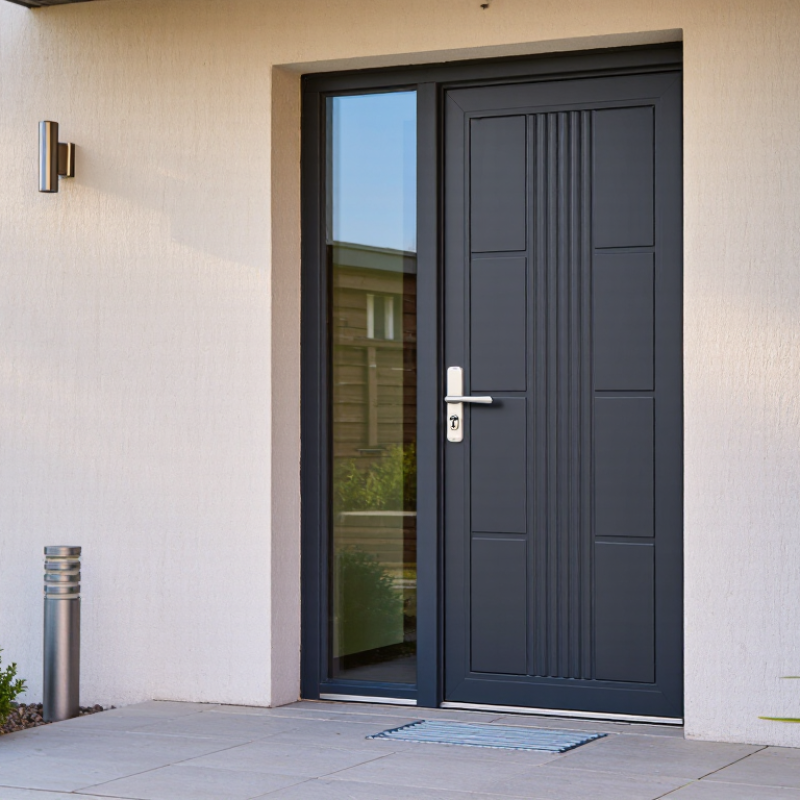
What Are the Top China Aluminium Front Door Suppliers?

China’s Aluminium Industry: 41.6 Million Tonnes Produced in 2023 (NBS)

China’s aluminium industry produced 41.6 million tonnes in 2023, according to the National Bureau of Statistics. This figure shows enormous smelting capacity. However, primary aluminium output does not automatically prove door-making expertise. Buyers must inspect the supplier’s extrusion, machining, and assembly capabilities.

The International Aluminium Institute highlights aluminium’s strong recyclability and lightweight advantages. These benefits support durable front-door designs with lower handling weight. Experienced suppliers should explain alloy selection, commonly including 6063 profiles for architectural applications. They should also document thermal-break construction, powder-coating thickness, and drainage details. Small details matter.

Ask for factory inspection records, dimensional reports, and recent test results. Air permeability, water tightness, and wind resistance should match the project’s required standards. The supplier should provide traceable material certificates and clear production tolerances. China Customs data can also help verify export experience, but shipment volume alone is not quality evidence. A supplier may have impressive production figures yet weak after-sales control. That point deserves more attention. Door samples should be checked by hand, especially corner joints, hinges, seals, and locking alignment. A smooth showroom sample can hide inconsistent mass production. Reliable evaluation combines national production data, technical documents, factory evidence, and independent testing.

How to Classify China’s Leading Aluminium Front Door Suppliers

China’s leading aluminium front door suppliers should be classified by capability, not advertising volume. A practical review begins with factory experience, production scale, and project history. Suppliers serving residential developments may differ greatly from those producing custom entrances for hotels or offices.

One useful category is the standardized manufacturer. It offers fixed profiles, repeatable finishes, and predictable lead times. Another is the project-based supplier, which handles oversized doors, thermal breaks, security hardware, and unusual openings. Export-focused suppliers deserve separate attention. They should understand packaging, documentation, installation drawings, and communication across time zones.

Technical evidence matters more than attractive photographs. Check aluminium alloy specifications, coating methods, drainage design, glass compatibility, and hardware testing. Ask for inspection records, sample approvals, and clear warranty terms. Independent testing or recognized certification can strengthen a supplier’s authority, but documents must match the actual product.

Reliability appears in small details. Can the supplier trace a batch? Does it report defects honestly? Are replacement parts available after installation? A polished showroom proves little. That mistake is common. During evaluation, compare sample corners, gasket joints, powder coating thickness, and packing protection. A supplier may pass one audit and still miss a delivery deadline. My own preference is to score quality, engineering support, communication, and after-sales service separately. A lower factory price can hide rework, site delays, or difficult maintenance. Supplier classification should remain flexible, because performance often changes between standard orders and complex projects.

Supplier Benchmarks: U-Values, Air Leakage, and GB/T 8478-2020

What Are the Top China Aluminium Front Door Suppliers?

Supplier quality should be judged by tested performance, not catalogue appearance. The IEA’s 2023 buildings report states that buildings consumed about 30% of global final energy in 2022. Therefore, a front door’s thermal performance deserves serious attention. Ask suppliers for the complete U-value, frame, glass, seal, and threshold details. A low U-value alone can mislead. Poor installation may create cold bridges around the frame.

Air leakage is equally important. Request laboratory results showing the tested pressure, specimen size, sealing design, and classification method. GB/T 8478-2020 provides a key reference for building doors and windows in China. However, buyers should confirm the applicable edition, product scope, and project requirements. A supplier should provide traceable test reports, not only internal claims. The report should match the proposed profile, hardware, glazing, and weather seals. Small differences matter.

Tips: Compare U-values under the same testing conditions. Check air leakage results at stated pressure levels. Inspect corner joints and threshold drainage. Ask for installation drawings before signing. A factory sample may perform well, but site workmanship can change the result. This benchmark is not perfect. Regional energy codes, door size, exposure, and occupancy all affect actual performance. I would also request random batch inspections, because one impressive test report cannot represent every shipment.

What Are the Top China Aluminium Front Door Suppliers? - Supplier Benchmarks: U-Values, Air Leakage, and GB/T 8478-2020

Benchmark Dimension Entry-Level Benchmark Professional Benchmark High-Performance Benchmark Buyer Verification Point
Typical aluminium door profile Non-thermally broken or basic hollow profile Thermally broken aluminium profile with insulated polyamide strips Enhanced thermal-break system with insulated chambers and optimized frame depth Confirm profile section drawings, alloy designation, wall thickness and thermal-break dimensions.
Common frame depth Approximately 50–70 mm Approximately 70–100 mm Approximately 90–120 mm or project-specific Frame depth alone does not prove thermal performance; request calculated or tested whole-door values.
Whole-door U-value target Approximately 3.0–5.5 W/m²·K Approximately 1.8–3.0 W/m²·K Approximately 1.0–1.8 W/m²·K Lower U-values indicate better thermal insulation. Check whether the value applies to the complete door, not only the glass or profile.
Typical glazing option Single glazing or basic double glazing Double insulating glass, usually with a low-emissivity coating Low-e double or triple insulating glass with warm-edge spacer options Verify glass build-up, cavity gas, coating position, spacer type and declared centre-glass U-value.
Air leakage performance Basic sealing; leakage may be noticeable at joints or corners Continuous perimeter gaskets and adjustable compression; suitable for normal residential use Multi-point locking, compression seals and carefully sealed thresholds; suitable for demanding climates Request a laboratory air-tightness report and confirm the test pressure, specimen size, leakage unit and classification method.
Recommended air-leakage benchmark Use only where local exposure and energy requirements are modest Target a low-leakage result under the selected Chinese or project test method Target the best applicable air-tightness grade under the project specification Air leakage is method-dependent; do not compare values unless pressure, area basis and standard are identical.
Door leaf construction Aluminium sheet or lightly insulated core Insulated aluminium leaf with a rigid thermal core or insulated glass panel Multi-layer insulated leaf with thermal-break edge details and reduced thermal bridging Check insulation type, density, moisture resistance, panel thickness and edge-sealing details.
Weather sealing Single or basic dual gasket arrangement Dual perimeter seals with sealed corners and a weather-resistant threshold Multi-seal system, drained threshold and detailed water-management design Inspect gasket continuity, corner vulcanization or bonding, threshold drainage and sill compatibility.
Hardware and locking Single-point latch or basic lockset Multi-point locking with adjustable hinges and compression control Heavy-duty multi-point hardware, adjustable hinges and tested long-cycle operation Confirm hardware load rating, corrosion resistance, cycle-test evidence and replacement availability.
GB/T 8478-2020 compliance Basic product documentation should be available Product configuration and declared performance should be traceable to the applicable standard requirements Complete technical file with drawings, material details, test records and configuration control GB/T 8478-2020 is the Chinese product standard for aluminium alloy building doors and windows; verify the exact product scope and current applicable edition.
Relevant air-tightness testing Supplier declaration only Test report from a qualified laboratory using the specified Chinese test method Independent report for the same size, configuration, hardware and glazing as the quotation For Chinese projects, confirm whether air-tightness testing is reported under the applicable GB/T 7106 method and related project requirements.
Finish durability Standard powder coating or anodizing Documented coating thickness and pretreatment process Exterior-grade coating system with controlled colour, gloss and corrosion-performance documentation Request coating specification, pretreatment details, colour tolerance and salt-spray or equivalent durability evidence where required.
Best-fit application Interior, mild-climate or budget-controlled projects Typical residential and light-commercial entrances Cold climates, exposed façades, low-energy buildings and premium residential projects Select the benchmark according to climate zone, exposure, door size, opening frequency and local energy code.
Benchmark note: The performance ranges above are indicative procurement benchmarks for anonymous supplier comparison, not certified results for any specific manufacturer. U-values depend on the complete door size, frame, leaf, glazing, threshold and installation details. Air-leakage results must be compared only when the same test standard, pressure, specimen configuration and reporting unit are used. GB/T 8478-2020 compliance should be confirmed through current technical documents and an applicable third-party test report.

Comparing OEM Capacity, Certifications, MOQ, and Export Experience

China’s aluminium door sector benefits from deep material capacity. The International Aluminium Institute reported 70.6 million tonnes of global primary aluminium production in 2023. This supports competitive extrusion and fabrication, but raw material scale does not prove supplier reliability. Review press capacity, thermal-break assembly, powder-coating control, and monthly output. Ask for recent production photos and inspection records.

Certifications need careful checking. ISO 9001 shows a documented quality system, not perfect products. For external doors, request test evidence aligned with EN 14351-1, including air permeability, water tightness, and wind resistance. Requirements may differ by destination. The 2023 ISO Survey recorded more than one million ISO 9001 certificates worldwide, so the certificate alone proves little. Verify the issuing body and certificate scope. MOQ can range from a few dozen units to one container, depending on profiles, colors, glass, and packaging. Export experience should include shipping records, clear Incoterms, and damage-control procedures. Some supplier answers remain vague. That deserves attention.

Tips: Compare three suppliers using the same drawing and bill of materials. Request a pilot order before mass production. Check corner joints, drainage holes, gasket compression, and carton protection. UN Comtrade places many aluminium door products under HS 7610, which combines doors with broader aluminium structures. Treat trade figures as directional, not exact door-sales data.

Evaluating Prices, Lead Times, Warranties, and After-Sales Support

Choosing among China aluminium front door suppliers requires more than comparing catalogue prices. A credible supplier should provide a detailed quotation, including panels, hardware, glazing, packaging, and shipping preparation. Ask whether the aluminium grade and coating thickness are clearly stated. A door priced 20% lower may use thinner profiles or fewer finishing options. That difference becomes visible around the frame edges.

Lead times deserve practical checking. Request separate timelines for sampling, production, inspection, and delivery. In my experience, standard doors may be ready within three to five weeks, while custom sizes can take longer. Holiday schedules and approval delays can change the promise. Get every milestone in writing.

Tips: Compare three itemized quotations, not three headline prices. Request photos of completed doors and factory inspection records. Read the warranty line by line. It should cover coating defects, hardware failure, and structural problems, with clear exclusions and claim periods. After-sales support also matters. Ask who handles damaged cartons, replacement parts, installation questions, and response times. A reliable supplier can explain the process without vague assurances.

One detail is often overlooked: replacement hardware may not match local standards. Confirm dimensions before ordering. Keep approved drawings and inspection photos. I would also order a sample when the project budget allows. It costs more upfront, but it can expose color, sealing, or alignment issues early. No supplier avoids every mistake, so transparent correction procedures are a stronger sign than perfect promises.

FAQS

How should I compare aluminium front door suppliers?

Judge tested performance, not catalogue appearance. Request complete reports, drawings, samples, and inspection records. Photos alone prove little.

Why does the U-value matter?

A lower U-value usually means better thermal insulation. Ask for frame, glass, seal, and threshold details. One number can mislead.

Can installation change thermal performance?

Yes. Poor installation may create cold bridges around the frame. Check installation drawings and inspect sealing at corners and thresholds.

How should I evaluate air leakage?

Request laboratory results showing pressure, specimen size, sealing design, and classification method. Compare results under identical conditions. Small differences matter.

What should I check about GB/T 8478-2020?

Confirm the applicable edition, product scope, and project requirements. The report should match the proposed profile, hardware, glazing, and seals.

How can I compare supplier prices fairly?

Compare itemized quotations, not headline prices. Include panels, hardware, glazing, packaging, and shipping preparation. A very cheap door may use thinner profiles.

How should I verify production and delivery times?

Request separate timelines for sampling, production, inspection, and delivery. Standard doors may take three to five weeks. Custom sizes can take longer.

What should a useful warranty and after-sales process include?

Check coverage for coating defects, hardware failure, and structural problems. Confirm exclusions, claim periods, replacement parts, and response times. Perfect promises are not enough.

Why should I order a physical sample?

A sample can reveal color, sealing, and alignment problems early. It costs more upfront. I might still miss site issues, so inspect the delivered batch too.

Conclusion

China’s aluminium industry produced 41.6 million tonnes in 2023, creating a strong manufacturing base for aluminium front door production. This overview explains how to identify leading China Aluminium Front Door suppliers by examining factory capabilities, product design, engineering expertise, and quality-control systems. It also highlights key performance benchmarks, including U-values, air leakage, durability, and compliance with GB/T 8478-2020, helping buyers compare suppliers on consistent technical standards.

The article further evaluates OEM capacity, certifications, minimum order quantities, export experience, pricing, lead times, warranty terms, and after-sales support. Buyers can use these criteria to distinguish reliable manufacturers from less suitable options and select a supplier capable of delivering stable quality, customized solutions, and dependable service for residential or commercial projects.

Charlotte

Charlotte

Charlotte is a seasoned marketing professional with a deep understanding of the company's portfolio and a passion for elevating its presence in the market. With a keen eye for detail and a commitment to excellence, she ensures that our professional blog is regularly updated with insightful articles......