Top Aluminium Entrance Door Manufacturers Worldwide?

Time:2026-10-20 Author:Madeline
0%

Choosing the top Aluminium Entrance Door manufacturers worldwide requires more than comparing attractive catalogues. Quality appears in the details: precise frame joints, stable powder coating, secure locking systems, and smooth operation after years of use. A well-made door should open quietly, resist rain, and maintain its appearance under changing temperatures.

This overview examines manufacturers through practical and verifiable criteria. These include production experience, material standards, thermal performance, design flexibility, warranty support, and customer feedback. Factory capabilities also matter. Automated cutting, controlled finishing lines, and careful quality inspections can reduce fitting problems on site. Experienced installers often notice these differences before homeowners do.

No ranking is flawless. Regional climates, building requirements, and project budgets can change the best choice. Some manufacturers publish detailed test data, while others provide limited technical information. That gap deserves attention. Buyers should request certificates, sample corners, hardware specifications, and installation guidance before placing an order. A beautiful entrance door can still disappoint when drainage or sealing is poorly designed.

The manufacturers discussed here represent different strengths, from large international production networks to specialist architectural workshops. Their approaches may suit residential developments, commercial buildings, or custom homes. Reliable suppliers usually explain lead times clearly and respond directly to technical questions. That practical transparency is often more valuable than impressive marketing language.

Real performance matters. This guide aims to help architects, contractors, and property owners compare manufacturers with greater confidence. It focuses on evidence, workmanship, and long-term value rather than appearance alone.
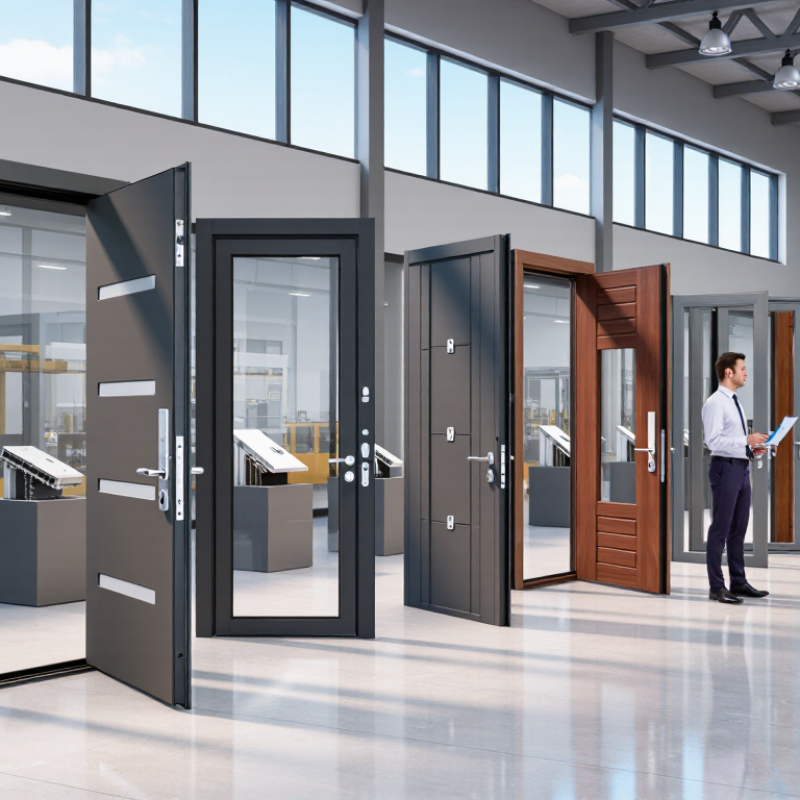
Top Aluminium Entrance Door Manufacturers Worldwide?

Aluminium Entrance Doors: Definition, Features, and Main Applications

An aluminium entrance door is an exterior door whose frame, panels, or both use aluminium profiles. In practical construction, it marks the boundary between public space and a building’s interior. The material is light, rigid, and naturally resistant to corrosion. Powder-coated or anodized surfaces can retain color under ordinary weather exposure, although coastal salt still demands careful maintenance. Good doors use thermal breaks between inner and outer aluminium sections. This detail reduces heat transfer through the frame. Without it, a slim frame may feel cold indoors.

Key features include dimensional stability, low maintenance, secure hardware, and flexible design. A properly engineered door can accept insulated glazing, multipoint locks, weather seals, and accessible thresholds. These parts matter more than appearance alone. Attractive doors can still fail when the threshold drains poorly or hinges are undersized. That is an avoidable lesson. Accurate opening measurements, reinforced fixing points, and tested air and water resistance improve reliability. Performance depends on installation quality, not only factory specifications.

Main applications include houses, apartment entrances, offices, hotels, schools, retail units, and healthcare facilities. Large glazed panels bring daylight into lobbies, while solid lower panels withstand contact from shoes, carts, and bags. In busy buildings, automatic or assisted opening may support accessibility, but controls must match traffic levels. Rural homes may prioritize weather protection; urban projects often need sound reduction and stronger security. One detail is easy to overlook: dark finishes can heat significantly in direct sun. Designers should check orientation, glass specification, drainage, and local performance requirements before approving a door.

Key Criteria for Comparing Global Aluminium Door Manufacturers

Comparing global aluminium entrance door manufacturers requires more than checking catalogues and polished photographs. Start with the alloy grade, wall thickness, and thermal-break design. Ask for test reports covering air leakage, water resistance, wind pressure, and repeated opening cycles. Independent laboratory evidence is more useful than a vague “premium quality” claim. Look closely at corner joints. Poorly crimped joints can admit water around the threshold. On a real project, this detail often matters more than the handle finish. Still, published ratings may reflect laboratory conditions, not a coastal site or busy hotel entrance.

Manufacturing consistency deserves equal attention. Request production samples, section drawings, coating specifications, and batch traceability. Powder coating should show controlled pretreatment and documented color tolerances. Ask how the factory handles warped profiles, damaged glass, or late dimensional changes. Responsive communication is evidence of operational maturity. Compare lead times with realistic packing, customs, and replacement schedules. A low price can become expensive when one missing gasket delays installation. That risk is easy to underestimate.

Reliable manufacturers explain installation tolerances instead of blaming installers for every problem. Evaluate warranty terms, spare-part availability, and technical support across time zones. References should include completed entrances with similar climate, traffic, and security requirements. Photographs help, but maintenance records reveal more. Ask whether hinges, locks, seals, and closers come from stable supply channels. Some suppliers offer impressive customization yet lack a disciplined change-control process. That weakness may not appear until the site is crowded and deadlines are tight. Choose evidence over confidence.

Leading Aluminium Entrance Door Manufacturers by Region

Aluminium entrance door manufacturers vary widely by region, reflecting climate, building habits, and local design preferences. In Western Europe, experienced producers often focus on thermal insulation, slim profiles, and tested weather seals. Their doors may include low-threshold systems and concealed hinges for modern residential projects. Factory quality control usually covers frame alignment, coating thickness, and hardware performance.

In North America, manufacturers commonly develop larger entrance systems for detached homes, apartments, and commercial buildings. Strong locking points and impact-resistant glass are frequent priorities. Coastal suppliers may offer enhanced finishes for salty air, while northern producers emphasize thermal breaks and resistance to freezing temperatures. Yet product claims can be inconsistent. Buyers should request test records, installation instructions, and clear warranty terms.

Asian manufacturers serve both mass housing and premium architectural projects. Some specialize in efficient production and broad customization, including wood-grain finishes, smart access preparation, and oversized panels. In the Middle East, suppliers often prioritize solar resistance, dust control, and durable powder coatings. African manufacturers may focus on practical security, repairable hardware, and adaptable sizes for local construction methods.

A reliable manufacturer should explain alloy selection, surface treatment, drainage design, and glass specifications without vague promises. Ask how doors perform after repeated opening, heavy rain, and direct sunlight. Samples help. Real project evidence helps more. Regional expertise is valuable, but it does not replace independent testing and careful installation. Even a well-made door can fail when the opening is measured poorly.

Manufacturing Standards, Customization, and Product Quality

Choosing a top aluminium entrance door manufacturer requires more than comparing catalogue photos. Reliable factories should document alloy grades, thermal-break systems, coating processes, and hardware tests. Standards such as ISO-based quality systems can support consistency, but certificates alone prove little. Ask for test reports, production tolerances, and installation guidance. A serious supplier explains where performance may vary. That honesty matters.

Customization should begin with the building, not a trend. Manufacturers may offer narrow or wide profiles, concealed hinges, insulated cores, laminated glass, textured finishes, and reinforced locks. Each option affects weight, drainage, thermal movement, or maintenance. Request a scaled drawing before production. Check opening direction, threshold height, gasket compression, and accessible clearances. On one project, a beautiful oversized panel strained the hinges because the initial review focused on appearance. We corrected it, but the delay was avoidable.

Product quality is visible in small details. Look for clean corner joints, even powder coating, smooth hardware movement, accurate seals, and protected packaging. Sample doors should be tested for air leakage, water resistance, wind load, and repeated operation where applicable. Factory experience helps, yet site conditions still matter. Coastal air, strong sunlight, and uneven masonry can expose weaknesses. No manufacturer is perfect. A supplier willing to record defects, explain corrective action, and improve the next batch is often more dependable than one promising flawless results. Keep communication documented.

How to Select the Right Aluminium Entrance Door Manufacturer

Choosing the right aluminium entrance door manufacturer requires more than comparing catalogue photos. On real projects, frame accuracy, drainage design, and installation support often decide performance. Ask for independently verified tests covering air permeability, water tightness, wind resistance, security, and thermal transmittance. Request recent reports, not general claims.

The International Energy Agency reported in its 2023 Global Status Report for Buildings and Construction that buildings consume about 30% of global final energy and produce around 26% of energy-related emissions. This makes thermal performance important. Compare the complete door assembly, including glass, threshold, frame, and hardware. ISO 10077-1 provides methods for calculating thermal transmittance, but calculated values are not always equal to site performance. Installation matters.

Manufacturer experience should also be visible in technical drawings, quality-control records, warranty terms, and after-sales response times. Check whether the factory follows a documented quality system and can provide conformity documents for your destination market. A strong supplier should explain limitations clearly. No factory is perfect. If a sales team promises identical performance in every climate, remain cautious. Coastal projects may need enhanced corrosion protection, while cold regions require careful threshold detailing. A low quote can become expensive after misaligned hinges, leaking corners, or delayed replacement parts. I would compare three complete offers, inspect a physical sample, and speak with a recent project owner before deciding.

FAQS

What is an aluminium entrance door?

It is an exterior door using aluminium profiles in the frame, panels, or both. It separates outdoor and indoor spaces.

Why is aluminium suitable for entrance doors?

Aluminium is light, rigid, and naturally corrosion-resistant. Coated surfaces usually retain color during ordinary weather exposure. Coastal air still needs maintenance.

What is a thermal break?

A thermal break separates inner and outer aluminium sections. It reduces heat transfer. Without one, the frame may feel cold indoors.

Where are aluminium entrance doors commonly used?

Common applications include homes, apartments, offices, hotels, schools, shops, and healthcare buildings. Large glazing can brighten a lobby.

Which features improve entrance door performance?

Look for insulated glazing, multipoint locks, weather seals, reinforced fixings, and suitable thresholds. Drainage matters too. Small details can fail.

How should buyers compare manufacturers?

Request alloy information, wall thickness, section drawings, coating specifications, and independent test reports. Check air, water, wind, and cycle performance.

Why is installation quality important?

A well-made door can still fail after inaccurate measurements or weak fixing points. Correct alignment, drainage, and installation tolerances are essential.

What should buyers check before ordering doors internationally?

Compare realistic lead times, packing, replacement schedules, warranties, spare parts, and technical support. A missing gasket can delay an entire installation.

How do regional conditions affect aluminium entrance doors?

Cold regions need effective thermal breaks. Coastal areas may need enhanced coatings. Hot, dusty locations require solar and dust resistance.

Should appearance be the main selection factor?

No. Check security hardware, glass, seals, drainage, accessibility, and maintenance records first. A beautiful door can still perform poorly.

Conclusion

An Aluminium Entrance Door is a durable, modern entry solution made primarily from lightweight, corrosion-resistant aluminium. It is valued for its strength, slim profiles, low maintenance, weather resistance, energy efficiency, and flexible appearance. These doors are widely used in homes, offices, commercial buildings, hotels, and public facilities, where security, aesthetics, and long-term performance are important.

When comparing global aluminium door manufacturers, buyers should evaluate material quality, production technology, structural design, thermal and acoustic performance, safety features, certifications, delivery capability, and after-sales support. Regional manufacturers may offer different advantages in customization, pricing, lead times, and compliance with local construction requirements. A reliable supplier should provide accurate technical specifications, finish and hardware options, quality inspection procedures, and solutions tailored to project needs. Ultimately, the right manufacturer is one that combines consistent product quality, professional communication, customization flexibility, dependable service, and proven experience with the intended application.

Madeline

Madeline

Madeline is a dedicated marketing professional with a wealth of expertise in our company's core offerings. With a keen understanding of the industry, she brings a unique perspective to her role, consistently delivering high-quality content that highlights the superior aspects of our products. As......