What Are the Best Aluminum Exterior Doors in 2026?

Time:2026-11-14 Author:Madeline
0%

Choosing the best Aluminum Exterior Door in 2026 means looking beyond a sleek frame. Performance depends on the complete assembly: thermal breaks, glazing, seals, threshold, hardware, and installation. A narrow black frame may suit a modern facade, but a poorly sealed sill can still invite drafts and water.

The U.S. Department of Energy’s Energy Saver guidance estimates that windows account for 25–30% of residential heating and cooling energy use. That figure applies to windows, not doors, but it shows why glazed door panels deserve careful scrutiny. Check the National Fenestration Rating Council label for independently certified U-factor and solar heat gain coefficient ratings. Then compare air leakage and water-resistance performance for the door’s intended climate and exposure. Details matter.

Building-science expert Dr. Joseph Lstiburek is widely associated with the concise warning, “All buildings leak.” For a door buyer, that is a reminder to assess drainage and installation—not a claim that every product fails. In 2026, the strongest options will pair thermally improved aluminum frames with tested glazing, durable finishes, secure multipoint locks, and documented performance ratings. A showroom sample can feel solid. It cannot prove how the installed door handles wind-driven rain or winter condensation. Ask for the test documentation, warranty terms, and installation requirements before choosing. There is no universal winner. The best door is the one that fits the opening, climate, exposure, and maintenance plan—and is installed as specified.
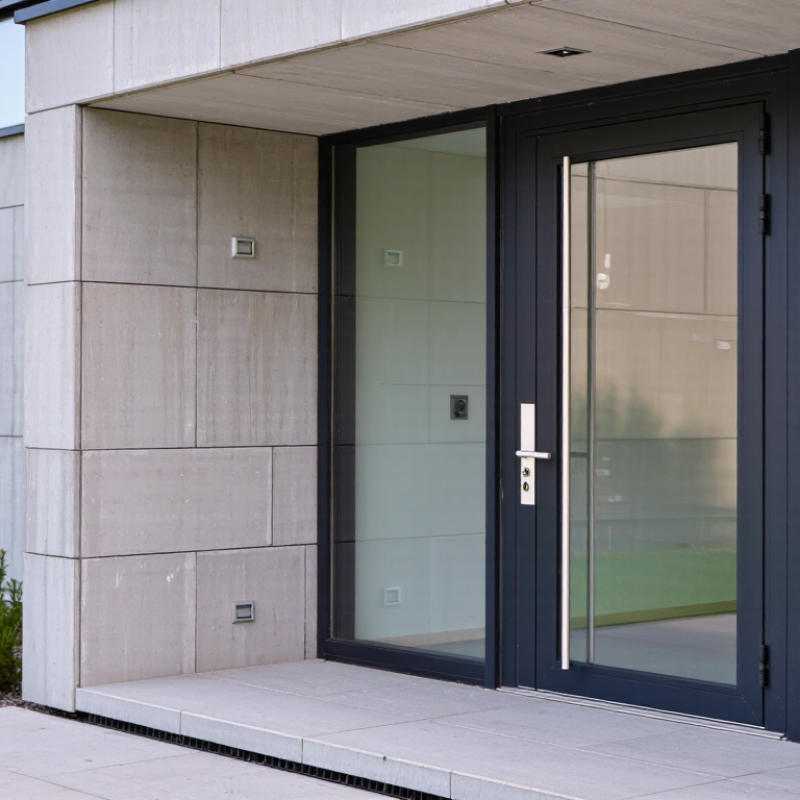
What Are the Best Aluminum Exterior Doors in 2026?

What Defines an Aluminum Exterior Door?

An aluminum exterior door uses aluminum in its frame, door leaf, or both. Some designs are largely metal; others have aluminum skins over an insulated core. That distinction matters. The word “aluminum” alone does not tell you how warm, quiet, or secure a door will feel. Look at the complete assembly, not just its finish.

A thermal break separates interior and exterior metal surfaces, helping limit heat transfer. Insulated glazing, tight weather seals, and a well-built threshold also affect comfort. Check how water drains from the frame and whether hinges and locks feel substantial. Powder-coated finishes can resist weathering, but scratches and neglected seals still need attention. Specifications are useful, though installation quality can make or break performance.

Tips: Ask for the door’s U-factor, air-leakage rating, and maintenance guidance. Inspect corners and seals in person. The “best” option depends on your climate, opening, and daily use—not the metal alone.

Which Aluminum Door Styles Are Available in 2026?

Aluminum exterior doors in 2026 come in several practical styles. Sliding doors move along a track, making them useful where a hinged panel would block a patio or walkway. They can create a broad glass opening, though the fixed panel limits how much space actually opens. A familiar choice. Hinged doors swing inward or outward and suit entryways, side entrances, and smaller patios. French-style pairs add a balanced look, but need clear space for both leaves.

Pivot doors rotate on floor and head-mounted hardware rather than side hinges. Their clean lines suit wide entrances, but hardware, panel weight, and weather sealing need careful specification. Bi-fold doors use multiple panels that stack to one side. They can open much of a wall, yet require room for the folded panels and a well-planned track. They need room.

When comparing styles, check the opening width, local wind exposure, threshold height, and glazing needs. A thermal break in the aluminum frame can help reduce heat transfer, but performance depends on the full door assembly. Weather seals and drainage details matter, too. Honestly, the widest opening is not always the most useful; furniture placement and daily traffic can change the answer. A careful site measurement is a sensible starting point.

How Do Aluminum Doors Compare in Strength and Efficiency?

Aluminum exterior doors are strong for their weight, making them suitable for wide entries and large glass panels. A well-built frame resists swelling and rot, but strength depends on more than the metal. Frame thickness, corner joints, hinges, locks, and secure installation all matter. A lightweight door can still feel solid. A poorly anchored one may not.

Efficiency requires closer attention. Aluminum conducts heat readily, so an uninsulated frame can transfer warmth or cold indoors. Look for a thermal break separating the frame’s inner and outer sections, plus insulated glazing and tight weather seals. These features can reduce drafts and heat loss, though actual performance varies by design and installation. Aluminum can dent or scratch, too. Not indestructible. That trade-off is easy to overlook when choosing by appearance alone.

Tips: Check the door’s published thermal rating and inspect its seals. Ask how the frame handles water at the threshold. On a cold day, feel near the frame edges for noticeable chill; it is not a formal test, but it may prompt better questions. A careful installation matters as much as the specification sheet.

What Are the Best Aluminum Exterior Doors in 2026? — How Do Aluminum Doors Compare in Strength and Efficiency?
A practical comparison of common aluminum exterior-door configurations. “Best” depends on climate, glazing, installation, and tested product performance.
Door configuration Strength and durability Thermal efficiency Best suited for Main trade-off What to check before buying
Thermally broken frame with an insulated, mostly solid panel Aluminum frame resists rot and does not rust like iron-based steel; performance still depends on the panel, joints, hardware, and installation. Usually a strong starting configuration for reducing heat transfer: the thermal break separates interior and exterior frame sections, while an insulated panel limits heat flow through the door leaf. Homes seeking a balance of durability, privacy, and insulation. Thermal breaks and insulated panels can add cost; results vary by design and workmanship. Look for a current NFRC-certified whole-product U-factor where available, plus documented air-leakage and water-penetration performance.
Thermally broken frame with insulated glass Frame strength depends on its section design and reinforcement. Large glass areas require appropriately designed glazing, frame support, and hardware. Can provide good efficiency when the frame has an effective thermal break and the glazing is insulated. More glass generally makes glazing specifications especially important. Entrances where daylight and visibility are priorities. More glazing can increase heat gain or heat loss compared with a well-insulated solid panel; privacy may also be lower. Check the whole-door U-factor and the glazing’s U-factor and solar heat gain coefficient (SHGC), not glass specifications alone.
Non-thermally broken aluminum frame Aluminum can provide a rigid, lightweight frame, but structural performance is product-specific and is not established by material alone. Conducts heat readily. Without a thermal break, the frame can be a significant path for heat transfer and may be more prone to interior-surface condensation in cold conditions. Mild climates, unconditioned spaces, or projects where low initial cost is the main priority. Typically less suitable for energy-sensitive, heated or cooled living spaces in climates with large temperature differences. Confirm whether the frame is genuinely thermally broken; compare certified whole-door ratings for the exact size and glazing option.
Thermally broken aluminum frame with a high-performance glazed panel Can be durable when the frame, glazing retention, hinges, and locks are designed for the panel size and expected use. Low-emissivity coatings, insulated glass units, and suitable gas fills can improve glazing performance; the complete door rating remains the useful comparison. Bright entrances in climates where solar exposure and seasonal temperatures need to be considered. Performance and comfort depend on glass area, orientation, shading, and glazing selection. Compare whole-door U-factor and SHGC. Lower U-factor means less heat transfer; SHGC should suit the climate and façade exposure.
Reinforced aluminum door assembly with security-focused hardware Reinforcement, secure hinges, a suitable multipoint lock, strong strike attachment, and sound anchoring can improve resistance to forced entry. No material alone guarantees security. Efficiency depends on whether the assembly also uses a thermal break, insulated panel or glazing, and effective weather seals. Entrances where security is a priority, provided the door is also selected for the local climate. Reinforcement and heavier hardware do not automatically improve insulation; installation quality remains critical. Ask for documented forced-entry or impact-test results where relevant, and verify lock, frame, hinge, and anchorage specifications as a complete system.

How to compare products: Request performance data for the exact door size, glazing, and configuration. A lower NFRC U-factor indicates less heat transfer; a lower air-leakage rating generally indicates less air passing through the tested assembly. Water resistance, structural pressure ratings, and security results are separate measures and should be checked against the project’s climate, exposure, and local requirements.

What Features Distinguish the Best Aluminum Exterior Doors?

The best aluminum exterior doors combine a rigid frame with a thermal break that reduces heat transfer through the metal. Look for insulated panels or low-emissivity glazing, plus weather seals that compress evenly against the frame. A sturdy threshold and adjustable multipoint hardware help limit drafts and keep the door aligned. Small details matter. A high performance rating still cannot compensate for poor installation.

Check the National Fenestration Rating Council label for verified U-factor and solar heat gain coefficient values. Lower U-factor generally means less heat transfer; the right solar gain depends on climate and orientation. The U.S. Energy Information Administration’s 2020 Residential Energy Consumption Survey reports that space heating accounts for about 42% of household energy use. That makes air sealing and insulation worth close attention, though a door alone will not solve a home’s energy losses. Ask for tested air, water, and structural performance, and inspect the finish and seals for your local exposure to rain, sun, or salt air.

Tips: Before buying, measure the rough opening and check the sill for water drainage. Ask who handles installation and how adjustments are made. Examine a sample corner: uneven seals or a cold metal bridge deserve questions.

What Are the Best Aluminum Exterior Doors in 2026?

Thermal-break construction is a key feature: it separates the interior and exterior aluminum surfaces to reduce heat transfer through the frame.

How to read this chart: Lower thermal conductivity means less heat flows through the material itself. A thermal break, often made with polyamide, interrupts the aluminum frame’s conductive path. These are representative material values—not whole-door U-factors, which depend on the complete door design, glazing, seals, and installation. Values vary by material grade and conditions.

How to Choose an Aluminum Exterior Door for Your Home?

Choosing an aluminum exterior door starts with your climate and the opening itself. Measure width, height, and wall depth at several points; older frames are not always square. Measure twice. For cold winters or hot summers, look for a thermally broken frame, which separates the inner and outer aluminum sections to reduce heat transfer. Ask for documented air-leakage and water-resistance ratings, not just claims of “weatherproof” performance. Glass panels should have suitable insulation, and low-e glazing can help limit unwanted heat gain.

Think about daily use, too. A wide door may look inviting, but it needs room to swing without hitting furniture or a path. Check the threshold height, hinge strength, lock compatibility, and whether the finish suits salty air or strong sun. A dark finish can absorb more heat; that may matter on a south-facing entry. Small details matter. Ask who handles installation and how the frame will be sealed to your wall, since even a quality door can leak if fitted poorly. I find appearance an easy thing to overvalue; compare specifications and written warranty terms before choosing. Don’t assume every aluminum door performs alike.

FAQS

What is an aluminum exterior door made of?

Aluminum may form the frame, door leaf, or both. Some doors use metal skins over an insulated core, so check the full construction.

How does a thermal break help?

It separates the inner and outer aluminum sections, reducing heat transfer. The door may still feel cold if its seals or installation are poor.

Which performance ratings should I check?

Ask for the U-factor and air-leakage rating. Also check tested water resistance and structural performance, rather than relying on “weatherproof” claims.

How should I measure the door opening?

Measure width, height, and wall depth at several points. Measure twice. Older openings may be uneven or out of square.

What should I look for in glass panels?

Insulated glazing and low-emissivity glass can improve comfort. The right solar heat gain depends on your climate and which way the door faces.

How can I spot weak seals or hardware?

Inspect the corners and press the weather seals lightly; they should meet the frame evenly. Check that hinges and locks feel substantial.

Does installation affect door performance?

Yes. A well-rated door can leak if the frame is poorly fitted or sealed. Ask who installs it and how adjustments are handled.

How do finish and daily use affect my choice?

Strong sun can heat a dark finish, while salty air can challenge exposed surfaces. Check maintenance guidance and consider the door’s swing space. Appearance can distract me; written ratings deserve a closer look.

Conclusion

Choosing the best Aluminum Exterior Door in 2026 starts with understanding how its frame, panels, and glazing work together. Aluminum is valued for its strength and slim profiles, which can support expansive glass designs while maintaining a clean, modern appearance. Homeowners can consider options such as hinged entry doors, sliding doors, folding configurations, and doors with different glass or panel arrangements. Each style offers a different balance of access, daylight, privacy, and space efficiency.

When comparing doors, look beyond appearance to insulation, weather sealing, hardware quality, security features, maintenance needs, and suitability for the local climate. Thermal breaks and well-designed glazing can help improve energy performance, while durable finishes and effective seals can support long-term comfort. The right choice depends on the home’s architecture, entryway dimensions, desired level of natural light, budget, and performance priorities. Evaluating these factors together makes it easier to select a door that is both practical and visually cohesive.

Madeline

Madeline

Madeline is a dedicated marketing professional with a wealth of expertise in our company's core offerings. With a keen understanding of the industry, she brings a unique perspective to her role, consistently delivering high-quality content that highlights the superior aspects of our products. As......