Choosing the best Aluminum Entrance Door in 2026 requires more than comparing finishes or catalog prices. Global buyers must balance thermal performance, security, weather resistance, maintenance, accessibility, and verified environmental claims. The 2024 Global Status Report for Buildings and Construction, published through the United Nations Environment Programme’s GlobalABC, reports that buildings consume about 32% of global energy and generate approximately 34% of global emissions. These figures make entrance systems relevant, although one door cannot solve building efficiency alone. Small gaps matter.
Material responsibility also deserves careful attention. The International Aluminium Institute reports that nearly 75% of all aluminium ever produced remains in use today. This supports aluminium’s long-term value and recycling potential. However, recycled content, alloy quality, coatings, and manufacturing energy can differ widely between suppliers. Buyers should request documented test results, thermal data, coating specifications, and warranty terms. A green claim without evidence is not enough.
Practical selection often begins at the threshold. Experienced specifiers inspect frame corners, drainage paths, hinges, seals, glass edges, and anchoring details. A thermally broken hinged door may suit a cold commercial lobby, while a reinforced pivot door can create a stronger architectural statement. Sliding systems may save space, but their tracks require disciplined cleaning. There is no universal winner. This guide compares major Aluminum Entrance Door types for global buyers, using performance evidence and real installation considerations. Some recommendations remain conditional. Climate, building codes, exposure, and workmanship can change the result. Data matters. Installation matters more.
For global buyers, 6063 aluminum remains a practical choice for entrance doors. Its clean extrusion surface supports detailed profiles and durable powder finishes. T5 means the profile is artificially aged after extrusion. T6 usually receives solution heat treatment and artificial aging. Strength values still depend on the applicable standard and supplier testing. The temper label alone is not enough.
A thermal break uses a low-conductivity strip, commonly reinforced polyamide, between interior and exterior aluminum sections. It interrupts the metal’s heat path. This matters in cold cities and hot, humid regions. The U.S. Department of Energy reports that windows can represent about 25% of household heating and cooling energy use. Doors have smaller areas, but poor frames can still create cold edges, condensation, and uncomfortable drafts. Check the complete door assembly, not only the alloy.
Look for tested U-factor, air leakage, water penetration, and structural performance. NFRC-style ratings can help buyers compare products across markets, although local testing rules may differ. A thicker thermal break is not automatically better. Seal design, corner joints, glass spacers, installation depth, and site workmanship also influence results. This is where specifications become less perfect. A strong factory test cannot fully predict careless installation. For coastal projects, request corrosion testing and verify drainage details before ordering.
2026 Best Aluminum Entrance Door Types for Global Buyers
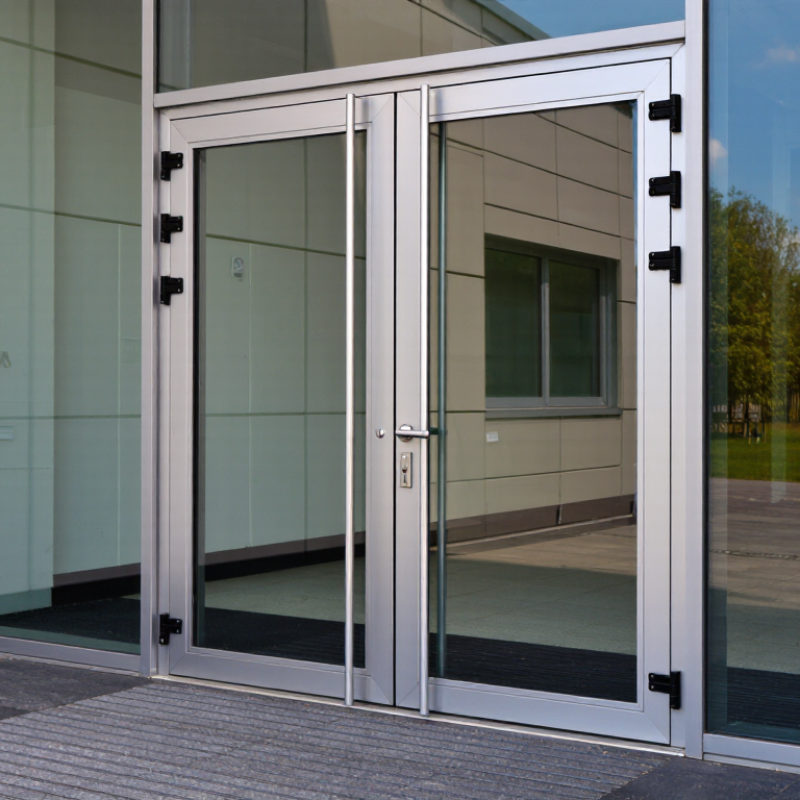
For global buyers, aluminum entrance doors must match climate, traffic, and building layout. Hinged doors remain practical for homes, offices, and compact entrances. They need strong hinges, accurate alignment, and a reliable weather seal. In coastal areas, buyers should request corrosion-resistant finishes and stainless-steel hardware. Small details matter.
Sliding doors save swing space and suit wide openings, retail areas, and modern homes. Their rollers must carry the panel without rough movement. Good drainage tracks reduce water problems during heavy rain. However, sliding systems usually provide less pressure sealing than hinged doors. This difference is easy to overlook.
Pivot doors create a wide, impressive opening for villas, hotels, and commercial lobbies. Their floor and head pivots require precise structural support. Folding doors can open most of a wall, making them useful for restaurants and indoor-outdoor spaces. Yet, more panels mean more seals, rollers, and adjustment points. Multi-panel doors offer flexible configurations, from two panels to expansive glazed walls. They demand careful site measurement and strong threshold design.
No type wins every project. That sounds obvious, but real selections often follow appearance first. A better review checks wind exposure, panel weight, drainage, thermal breaks, glass performance, and daily use. Local installation standards also deserve attention. Even a well-made door can perform poorly after rushed installation.
This comparison shows the typical number of moving panels in a common aluminum entrance-door configuration. Hinged and pivot doors generally use one main door leaf, sliding doors commonly use two panels, while folding and multi-panel systems are selected when a wider opening and stronger indoor–outdoor connection are required. Actual panel counts vary by opening size, structural design, local building codes, and project specifications.
For global buyers, the best aluminum entrance door is not simply the thickest or most attractive option. Thermally broken aluminum doors usually perform better because polyamide barriers reduce heat transfer through the frame. Insulated panel doors can improve comfort further. Large glazed doors need carefully selected low-emissivity glass and warm-edge spacers. A practical target is a U-factor of 1.6 W/m²K or lower for the complete door assembly, not just the glass. Ask for the tested whole-door value.
Air leakage matters during windy weather. A door may feel solid but still leak around the gasket, threshold, or lock area. Request air-permeability results from recognized testing procedures, such as EN 1026 and EN 12207, or an equivalent regional standard. Lower leakage classifications usually indicate tighter construction.
Water resistance should be verified through a controlled spray test, such as EN 1027. Watch the threshold design. Poor drainage can cause trouble. Test pressure must match the intended climate and building exposure.
Tips: Confirm whether values apply to the full installed door. Check frame size, glass area, and threshold details. Request laboratory reports, not only catalog claims. Inspect corner joints and gasket compression on sample units. A small installation gap can reduce real performance. This is often underestimated. Test results also cannot replace careful site installation, and that limitation deserves honest attention.
For global buyers, compliance should guide the door type, not follow it. EN 14351-1 supports performance assessment for external pedestrian doorsets in relevant European markets. It covers essential characteristics, including air permeability, watertightness, and wind resistance. In North America, ASTM E283 measures air leakage, while ASTM E331 evaluates water penetration under controlled pressure. AAMA 2605 focuses on high-performance organic coatings, including color retention, chalk resistance, and film integrity.
Numbers matter. The International Energy Agency’s 2024 Global Status Report states that buildings consume about 30% of global final energy. The U.S. Department of Energy estimates windows account for roughly 25–30% of residential heating and cooling energy use. Entrance doors are smaller openings, but poor seals can still create cold drafts, moisture marks, and higher HVAC demand. A certificate is not a magic shield. Installation, threshold drainage, thermal breaks, and gasket compression can weaken real performance. Details decide.
Tips: Request complete test reports, not only compliance logos. Confirm the tested door size, glass configuration, hardware, and pressure values. Ask whether results apply to the supplied assembly. For coastal projects, specify an AAMA 2605 coating and verify pretreatment records. For European projects, check the required Declaration of Performance and market documentation. For North American projects, compare E283 and E331 results with local energy and water-management requirements. Testing matters. Mistakes happen when buyers compare standards without comparing test conditions.
For global buyers, the best aluminum entrance door depends on the site, not fashion. A coastal home needs corrosion-resistant finishes, sealed joints, and stainless hardware. Cold regions benefit from thermal breaks and insulated cores. Hot climates need low-solar-gain glazing and ventilated threshold details.
In site inspections, I have seen attractive doors fail because drainage was ignored. Climate changes the specification.
Measure the clear opening, wall thickness, and finished floor height before comparing prices. Large openings may require reinforced frames, stronger hinges, or a pivot design.
A narrow entry may work better with a single hinged panel. Security class should come from documented testing, not a heavy-looking lock.
Ask whether the rating covers the complete door assembly, including glass, frame, cylinder, and hinges. Local certification requirements can differ.
Warranty terms deserve the same attention as the door itself. Check coverage for finish fading, corrosion, seals, hardware, and installation defects. Some warranties exclude coastal exposure or poor maintenance.
Request a written cost breakdown covering the door, glass, delivery, taxes, fitting, and future adjustments. The cheapest quote can become expensive after threshold repairs.
My earlier buying comparisons focused too much on unit price. Total ownership cost proved more useful.
Leave room for inspection.
A hinged door usually fits compact homes and offices. It needs strong hinges, accurate alignment, and a dependable weather seal. Small details matter.
Sliding doors suit wide openings, retail spaces, and modern homes. They save swing space. Check roller movement, track drainage, and panel weight. Their pressure sealing may be weaker than hinged doors.
Pivot doors create wide openings for villas, hotels, and commercial lobbies. Their floor and head pivots need strong structural support. Poor support can cause alignment problems.
Yes, folding doors can open most of a wall. Multi-panel systems offer flexible glazed configurations. However, more panels mean more seals, rollers, and adjustment points. Maintenance becomes less simple.
Request a whole-door U-factor of 1.6 W/m²K or lower. The value should include the frame, glass, panels, and threshold. Thermal breaks reduce heat transfer through aluminum frames. Do not rely on glass-only data.
Request laboratory results for air leakage and controlled water testing. The test should represent the complete installed door. Inspect gaskets, corner joints, thresholds, and drainage paths. A small installation gap can reduce real performance.
Coastal projects need corrosion-resistant finishes and stainless hardware. Cold regions benefit from thermal breaks and insulated panels. Hot climates may need low-solar-gain glazing. Climate changes the specification.
Compare the door, glass, delivery, taxes, installation, and future adjustments. Ask about finish fading, corrosion, seals, hardware, and installation coverage. A low quote can mislead. My earlier comparisons focused too much on unit price.
Choosing the right Aluminum Entrance Door in 2026 requires balancing material quality, thermal efficiency, design, and regional performance requirements. Most reliable systems use 6063-T5 or 6063-T6 aluminum alloy, with thermal breaks that help reduce heat transfer. Buyers can select from hinged, sliding, pivot, folding, and multi-panel configurations according to available space, traffic flow, and architectural style. Larger openings may benefit from sliding, pivot, or multi-panel designs, while hinged doors often provide a practical solution for standard entrances.
Performance should be evaluated through measurable data, including a target U-factor of 1.6 W/m²K or lower, controlled air leakage, and verified water resistance. For international projects, compliance with EN 14351-1, ASTM E283/E331, and AAMA 2605 can support consistent quality and durability expectations. A practical buyer matrix should compare climate conditions, opening dimensions, security class, warranty coverage, and total cost before purchase. This structured approach helps global buyers select a safe, efficient, durable, and visually suitable entrance system.
Shieldoors